Becoming Women in Action
The first day is always filled with excitement and nerves. As the program participants arrive, the air fills with curiosity. These educators are wondering what the day will bring and who they will share space with. Will it be like a class or professional development? How much participation and group work will there be? As facilitators, we’re mirroring some of those same emotions. We’re hoping to inspire the participants, create a community and facilitate a moment in which women can realize all they can be and all that they already are. Welcome to Women in Action.
I first learned about Women in Action as an attendee in 2014. It was fall and I was looking for ways to connect with other women educators and to find my place within ETFO. Our neighbouring teacher local, Hamilton-Wentworth, was hosting Women in Action Level I and reached out with a few open spots to fill. I was intrigued by the idea that someone was intentionally creating a space where women could connect and support one another. I applied and was accepted.
That weekend I was the only one from my local attending and had no real idea what to expect. I was definitely out of my comfort zone, but I was determined not to let anxious feelings get in the way of my learning. I set out to make the most of this exciting opportunity.
That first session, the facilitators were wonderful, cultivating space for discussions and partner work. We talked about what it meant for us to be women in education, in society, and the expectations put on us bothers and ourselves. We discussed hopes and dreams, leadership opportunities and skills. I learned so much from the other participants, some of whom are WIA facilitators today or doing other great work across the province.
Looking back, this was the first opportunity for professional learning that created the space for me to think about who I was and what was important to me. It was so empowering to understand that leadership looks different for everyone, and that Women in Action is a place to celebrate every type of leadership style and to figure out the type of leader that you can become.
Fast forward to the present day and I’m lucky enough to be a WIA facilitator. When the call for facilitators came through my email, I wasn’t sure that I was the right fit. Could I be responsible for a program that was so impactful? My goal was to meet my colleagues where they were, uplifting their voices and learning about their experiences.
Each time I facilitate a session for a local, I’m thrilled, with butterflies of anticipation. I can’t wait to meet the women, for me to learn about their stories and for them to learn a little more about themselves. It’s a small moment in their growth, but from those tiny sparks great fireworks can emerge.
Having run since ETFO’s formation, the program has benefitted thousands of women, providing a first step in their leadership journey. The program currently consists of three different levels, which are meant to be completed in consecutive order. Levels I and II are available to locals annually, with costs subsidized by the provincial office. In the fall, an interested local can apply to host a session. ETFO provincial will send the planning information, supplies and at least two facilitators to the hosting local.
Each level of Women in Action is unique and is a place where women can step out of their comfort zones and into their power. Each session cultivates empowerment and leadership development. Women are asked to think about their skills in advocacy and organizing. There is space for open dialogue about what it means to be anti-oppressive and to recognize how to support one another through barriers.
Another main focus is nurturing further union engagement. As facilitators, we hope women feel that ETFO is an organization they can see themselves in. We review the structure of ETFO and where our organization fits within the broader labour movement. We also share opportunities with participants, encouraging them to attend provincial programs, workshops, conferences and even ETFO’s Annual Meeting. In the interest of fostering relationships and solidarity among women educators, facilitators will often encourage participants to continue to connect and uplift one another once the program has ended. All three sessions are meant to be a catalyst for greater engagement and inspiration.
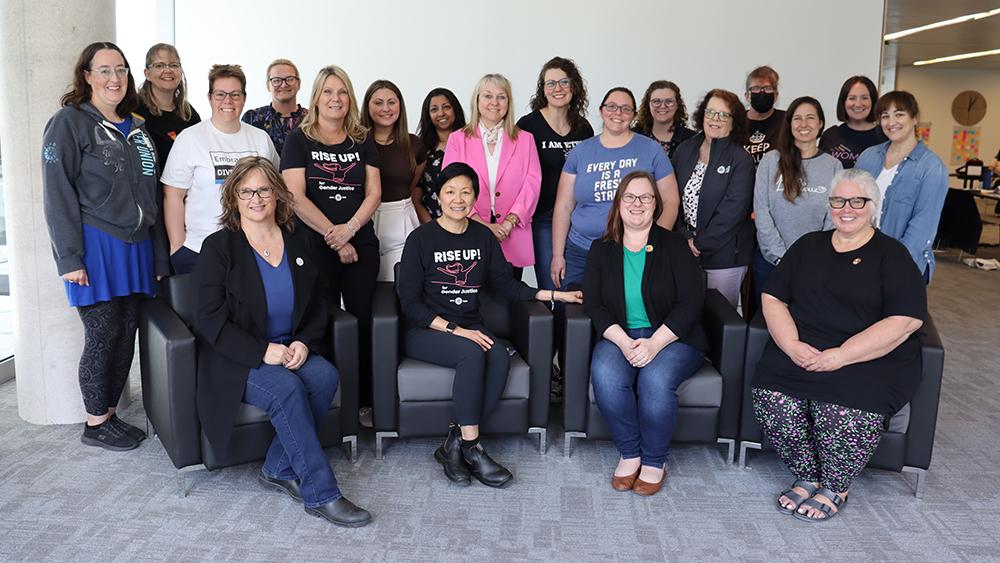
For the past few years, ETFO has offered 10 locals across the province the opportunity to host a Women in Action weekend. For many locals, this is an opportunity to create a space for women members to gather in a safe community with one another. Women often share that this is the first provincial program that they have ever attended.
In both Women in Action I and II, members are released from work for the day on Friday to attend the program, which wraps up by noon on Saturday. While Friday can be a long day of learning and sharing, it’s so valuable to come together in person for the day! You can expect to extend and build upon your knowledge of the structure of ETFO, opportunities that are available for women members, and to engage in conversations about anti-oppression in education.
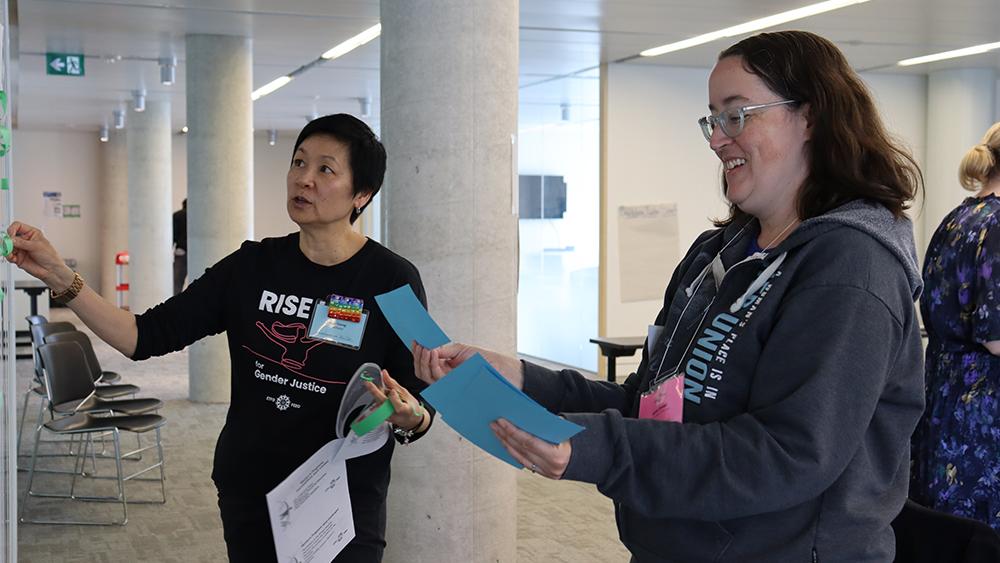
In Women in Action I, women are encouraged to think about their own strengths, skills and leadership styles. At the end of this session, participants can create an action plan to help build on their leadership styles and create a stronger union. Together, facilitators and participants brainstorm next steps of engagement at the local and/or provincial levels.
Women in Action II is the chance to dive in a little deeper into learning, advocacy and leadership (completion of Level 1 is a prerequisite.) In this session, you can expect to learn more about the development of women’s rights in Ontario, grow your confidence and build an understanding of how social, political and economic forces affect women. Participants are challenged to think about their voices and their ideas for how to build a stronger union, and end by creating a more in-depth strategic action plan focused on how they will intentionally create change, engage with others and learn practical leadership skills.
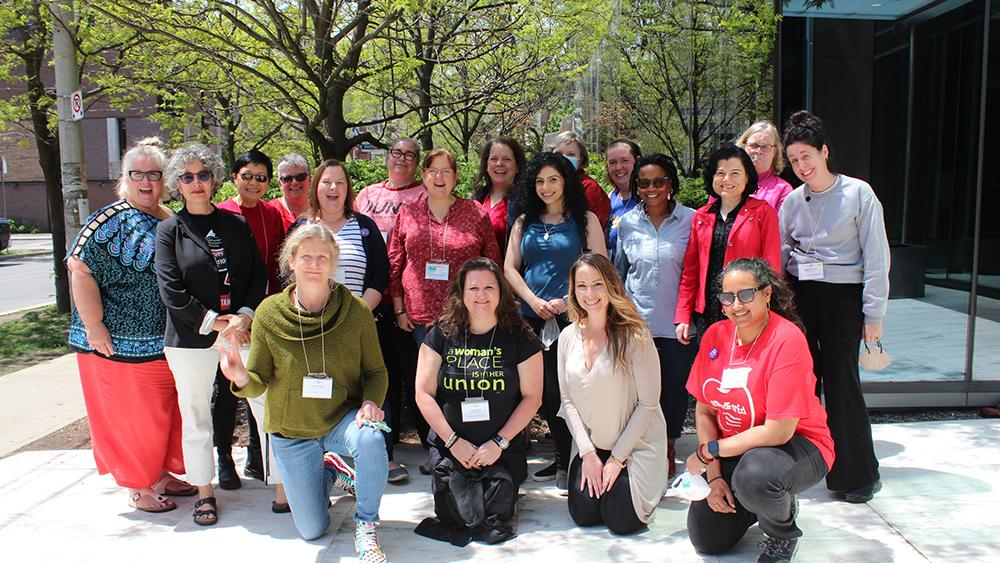
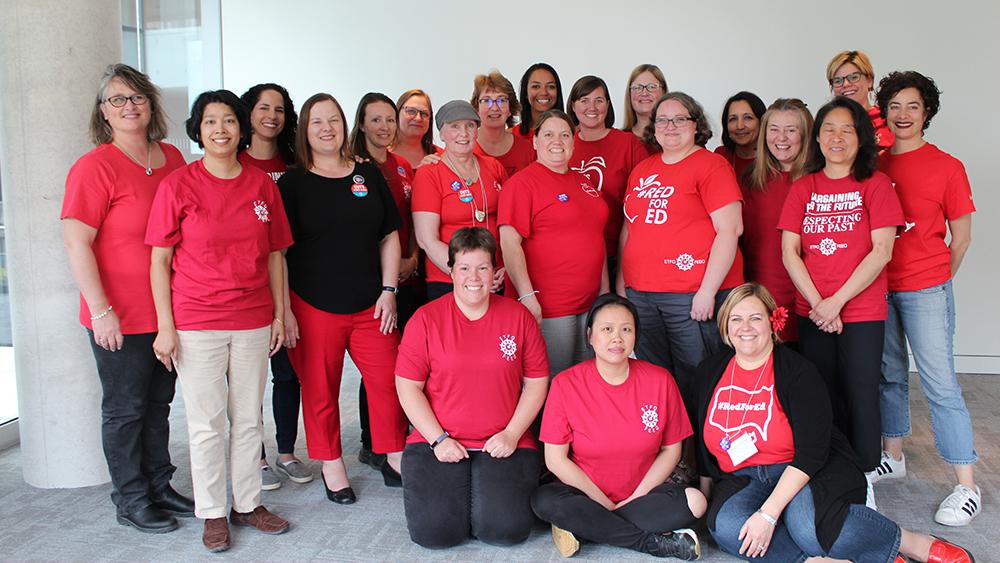
Women in Action Level III is the final chapter in the series and is hosted at the ETFO provincial office in Toronto. Women from across the province participate in this two-part program that typically runs in May and October. WIA III is a culmination of the previous sessions, focused on women’s leadership within ETFO, continuing to cultivate an intersectional lens, and enhancing women’s skills and leadership.
In the first intensive session of Level III, women expand their leadership skills to community organizing while focusing on the meaning of a social justice union. At the end of the first two days in May, women engage in action planning through the lens of intersectional feminism and social justice union organizing. Upon return in the fall, there is the opportunity to examine identity and consider how to use privilege to achieve justice for others.
Reflecting on each participant’s learning, these final two days resonate with many women as a pivotal point in understanding leadership. As the participants explore who they are as leaders, facilitators nurture transformational leadership styles. This form of leadership seeks to change culture with an anti-oppressive lens. What I love most about this level is its focus on applying the ideas we have learned to our interactions, identities and creating new possibilities.
After so many years and with much change and development, Women in Action still holds true to its original intent: to empower women to be seen, feel valued and affirm that they have the skills and abilities to lead. ETFO needs the voices and perspectives of diverse women leaders, and this program helps develop them. Women’s leadership should be respected in every room, in every space, and we should bring others along with us. When one woman rises, it is our responsibility to ensure that all others do as well.
As my co-facilitator and I wrap up our session, the program ends the same way it began: With butterflies of anticipation and excitement. We wonder what will happen next, who is coming with us and who is bringing us with them. There are nerves and curiosity and the little thrill of knowing that an incredible journey continues. Friendships are made and strengthened by a shared knowledge of who we are, and an understanding that we are better together.
We are all women in action.
Sharon Ethier is a member of the Niagara Teacher Local.
A History of Women in Action
The Women in Action programs have been a staple of ETFO’s commitment to women’s leadership since the organization formed in 1998. Prior to that, in 1997, staff at the Federation of Women Teachers’ Associations of Ontario (FWTAO) began presenting the workshop regionally, anticipating the new union made up of the predecessor organizations (FWTAO and the Ontario Public School Teachers’ Federation). The program was developed to identify and encourage women to move into leadership positions in their local areas, especially with the creation of ETFO.
The program was an iteration of another – also called Women in Action – that was developed by members of the Women’s Committee of the Nova Scotia Federation of Labour (NSFL). Mary Morison, who joined FWTAO staff in 1997, worked with the Women’s Committee in the late 1980s and took the program around Nova Scotia. When she came back to Ontario, she brought the program with her. In both provinces, Women in Action was offered in regional locations over weekends.
Weekends were chosen to mimic the time commitment local leaders often have to make work outside of the “regular” work week. In time, the program has shifted to be held using one release day, an evening and a half-day on the weekend.
After a couple years, staff trained member leaders to deliver the program throughout the province. Member facilitators were selected from graduates of Level I to present the materials and provide feedback to staff around any changes that could be made.
Level I is an introductory program for women members who want to learn more about the governance, politics and inner workings of ETFO local and provincial structures. Many of the women who went through the program initially took on more leadership roles in their locals and provincially, with others stepping up to act as member facilitators.
By 2004, a need to develop a Level II program was identified by past participants. This second level focused more intensely on leadership goal setting, connections to the wider labour movement and the political structures in the union.
Word of the program spread to other unions. In 2004-05, ETFO worked with L’Association des enseignantes et des enseignants franco-ontariens (AEFO) to help them present their own version of WIA to members. It was also shared with staff from the South African Democratic Trade Union (SADTU), who adapted it for their members.
Over the years, the core tenet of the program hasn’t changed: to empower and encourage women members to become more involved in their local and provincial unions and take on more leadership roles. However, with input from members, staff, and evolving terminology and pedagogy, the program has shifted over time, incorporating an intersectional feminist lens and updating materials as needed.
In 2019, Level III was developed by a team of member writers and staff who sought to create a level that moved beyond ETFO union spaces and into member mobilization and organizing. This level focused on growing the skills obtained in the first two levels and bringing about wider change in members’ communities, often working in tandem with the work members were already doing in locals.