


Organizing for What Comes Next
Ontario’s public education system is at a crisis point. Across the province, educators continue to face increasing complexity in our schools due to chronic underfunding, staffing shortages, escalating incidents of violence and growing workloads. At the same time, we have begun what is already shaping up to be a challenging round of provincial bargaining following the expiration of collective agreements on August 31, 2026, for all 275,000-plus public education workers in Ontario. In light of all this, taking action through organizing is not optional, it is essential.
While it can sound daunting, organizing is simply about building relationships; engaging in conversation with friends, family and colleagues; and encouraging them to act on issues that matter in our workplaces and in public education as a whole.
Every ETFO member, no matter your role or level of experience, can organize. You have the power in your own day-to-day lives to make a difference. It all starts with us!
Start with Relationships
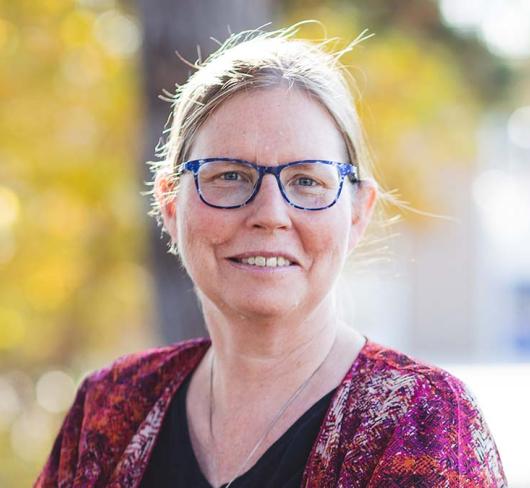
I began my role as the ETFO Waterloo Teacher Local member mobilizer and organizer in December 2024. It is a full-time, released staff position that allows our local to invest some surplus funds back into the membership. I don’t think anyone, least of all me, knew the incredible and immediate impact that the position could have.
I came into the role at a time when our school board was without a director. Violence was on the rise, as it has been in school boards across the province. Our members were exhausted, and many were feeling like their voices and experiences didn’t matter.
One of my first actions was to draw on my established relationships with our local trustees to offer questions they could ask administrators about strategies to address violence in the classroom. As a result, the trustees compelled the school board to consult with bargaining units on this important topic. This was one of the first meaningful opportunities many frontline staff had to share their experiences with violence in the classroom, and our members stepped up! In just a few short days, our stewards collected feedback from their colleagues, which we were then able to provide to the school board and trustees.
Because of frontline staff taking the time to share their experiences, the trustees were moved to propose a motion to request data on classroom evacuations, a missing piece of the “data puzzle.” If the motion succeeded, it would be the first time this type of information would be available in Ontario.
Following a very well-attended “trustee meet-and-greet” event strategically planned the night before the board’s vote, the motion passed unanimously, and a form to track classroom evacuations was launched in September 2025. Almost a year and a half later, trustees still mention this event as being incredibly impactful, thanks to the classroom educators sharing the realities of their working conditions and their concerns for the students they served.
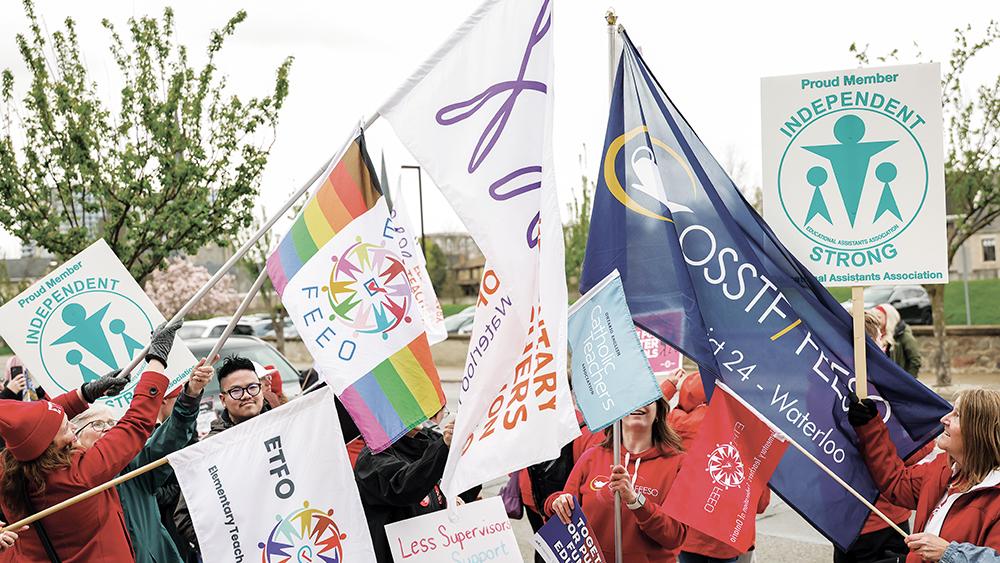
With this success, members finally felt like they were sharing the realities of their classrooms, and that they were being heard. As we collaborated with the local independent educational assistant (EA) association, Ontario Secondary School Teacher’s Federation bargaining units and our ETFO sister locals, our relationships with the other bargaining units in our buildings were getting stronger and more united.
The lesson here? When we work together across unions, job classes and working groups, we are stronger and have enormous power to make change, both locally and across the province.
Year in Review
I am certain that had we not had this successful local campaign to track classroom evacuations over the past year and a half, we would have seen entirely different levels of participation in our collective bargaining action plan last year. Because education workers across bargaining units had worked so closely to collaborate on advocating for evacuation data, we had a strong track record of supporting each other and collaborating to find common ground.
Teachers drove distances to pick up “Red for Ed” pins for their custodian colleagues. DECEs designed and then shared “Safer Schools” bookmarks with their teacher colleagues. Custodians showed up for the evacuation campaign because teachers and other education workers showed up for them in the fight against contracting out of their labour. All three sister locals and the EA association executive purchased matching red “I ♥ Public Education” T-shirts and wore them to community events throughout the year.
The success of these actions proved that engagement is contagious, creating the momentum we carried into the most active year of organizing and mobilization I’ve witnessed in my 17-year career.
Across the province this year, ETFO members:
- conducted Bill 33 walk-ins
- collected over 55,000 petition signatures
- collaborated with all affiliates for a province-wide day of action on April 29
- submitted thousands of postcard pledges with our dreams and demands for public education
Throughout these events, we built our “union muscle” with in-school conversations, community outreach and skill-building around talking politics at work. We discussed with our colleagues and our community the dangers of Bill 33, Bill 101, the broken special education funding model and the deep underfunding of our public schools. We also directed our colleagues and the public to learn more about funding cuts to local schools and ETFO’s building blocks for stronger public education at BuildingBetterSchools.ca.
Waterloo Region Perspective
Here in Waterloo, our three sister locals have worked closely with education workers through our regional coalition, Together in Education (TIE). We have built strong relationships and worked through occasionally difficult conversations to find common ground. Through TIE, we established a “super PAC,” a meeting of political action leads from all the local education bargaining units, to collaborate.
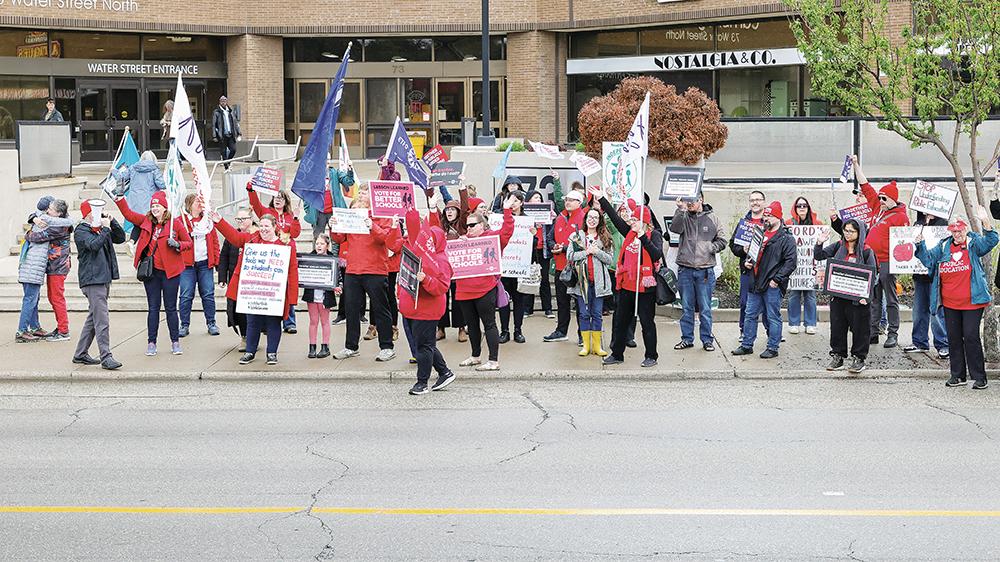
This included working on plans for Bill 33 walk-ins that ensured all education worker colleagues could participate in whatever ways possible. Thanks to an ETFO occasional teacher, custodial and maintenance staff colleagues had Red for Ed T-shirt pins to wear on their custodial blues, as they could not participate in the walk-ins or wear their red shirts due to the constraints of their jobs. ETFO DECEs were able to participate by wearing their shirts despite many being occupied running extended-day before- and after-school programs. Instead of one big group photo, we collected pictures to ensure as many staff as possible were reflected in our documentation of the day. Some schools did before-school walk-ins, others did after-school. The Bill 33 action was customized to the job categories, bell times and locations of each work site, something that only happened because all voices were at the planning table and staff were able to tailor the actions to what worked at their school.
The solidarity we built at that Bill 33 walk-in planning table continued throughout the year as we collaboratively planned a public education advocacy symposium in February 2026. The in-person event featured a panel with MPPs Aislinn Clancy and Catherine Fife, a parent involvement committee (PIC) member, a trustee, the EA association president and an ETFO teacher. Each affiliate had a table at the event and many new relationships were built.
As the petition campaign kicked off, our members collected over 2,500 signatures across our region, which accounted for over five per cent of the provincial total. Stewards and other members connected with school council chairs, petitions were shared with PICs and the Waterloo Region Assembly of Public School Councils (WRAPSC), and members took petitions to hockey games, yoga classes and even puppy school!
When the day of action came around, we were ready. To kick off the day, approximately 25 education union local leaders gathered at our ETFO WRTL office for media availability. As a result, we were the feature story on CTV news that evening and had seven news articles published over the next two weeks. After school on the day, we organized a rally outside Conservative MPP Brian Riddell’s office in Cambridge, followed by a “Solidarity Social” with participants from both the Catholic and public school boards across all education worker groups. Our day was a resounding success, with the collection of over 300 pictures and stories from more than 115 work sites across the region.
When we stand together, we win!
Choose Your Own Adventure!
Every member has different experiences, capacity and life situations. By offering varying levels of participation – what I like to call “choose your own adventure” political action – we create clear, accessible pathways for educators to contribute at their own comfort level, which is essential for building a sustainable culture of engagement.
Every local across the province has people with the passion, abilities and sphere of influence in their daily lives to empower change for public education. That said, it’s important to acknowledge that for some, being at work and completing the day is enough. There are always ways to become engaged while keeping these realities in mind.
You can start small, one action at a time:
Make sure your colleagues know about the collective bargaining e-newsletter updates from ETFO provincial.
Consider joining an ETFO local or provincial committee or becoming a steward at your workplace.
- Share stories with friends and family about your daily life working in education (excluding identifying information about students) to raise awareness about what is happening, and what they can do about it: call their MPP, sign a petition, share BuildingBetterSchools.ca content and downloadable flyers about local schools.
- Connect with the school council at your work site or your own child’s school. This group of engaged folks are always looking for ways to support education, which is a perfect place to start!
- When you’re at the hockey arena, community centre, gym or local event, share your passion for education with those you meet and talk about what they can do to get involved. You’ll be surprised at how much amazing support there is in the community!
The time we take to have these conversations will be worth it as we build public support and public engagement throughout the bargaining process and beyond.
The Year Ahead
As we move into a potentially tumultuous year, remember that power is built in the small, meaningful actions we take every day. When our school board recently shifted their device allocation model, one intermediate steward flagged a threat to equitable tech access. We didn’t wait; we launched a feedback form over a busy report card weekend and gathered 71 responses from intermediate teachers in just five days. That rapid, collective response wasn’t just a survey, it was an assertion of our voice and a powerful antidote to the helplessness we often feel.
Every time we act on a local issue, we dismantle that feeling and build the trust required for bigger challenges. So, reach out to your local leaders, voice your concerns and support your union! We are stronger together. Let’s make this the year we don’t just defend our schools, we define our future.
Niki Kazemzadeh is a member of the Waterloo Teacher Local.