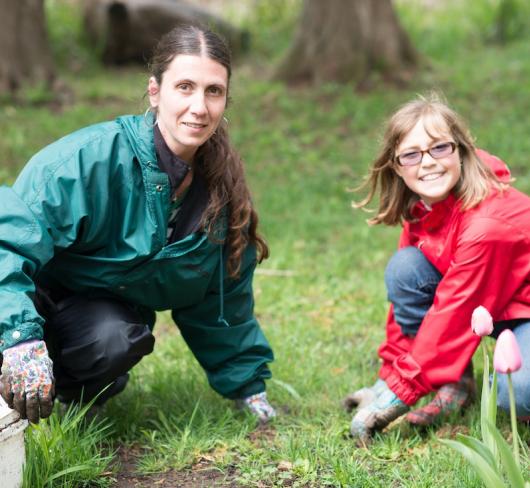
Go for Green!
Go for Green is a bi-annual event at Millgrove School that proves a small school can accomplish big things.
Go for Green is a bi-annual event at Millgrove School that proves a small school can accomplish big things.
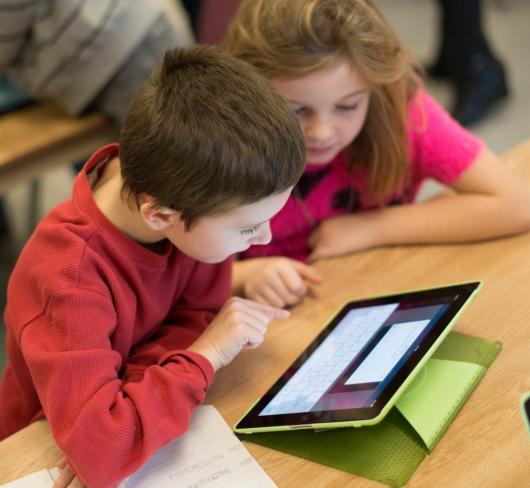
“Can I tweet this?” is a question that I routinely hear in my grade 2/3 classroom at Eastwood Public School in Windsor, Ontario. My students interact online with over 160 other classrooms around the world through Twitter.
Working with electrical equipment is wired into an educator’s day. We handle SMART Boards, computers, audio-visual carts, and extension cords. If this wiring and equipment is damaged, faulty, or misused, it can become an electrical hazard.

Teachers and schools have a key role to play in our planet’s future. Environmental education is a key component for creating a generation of students who understand that each of us can powerfully affect the fate of the natural world, environmental systems and their sustainability.
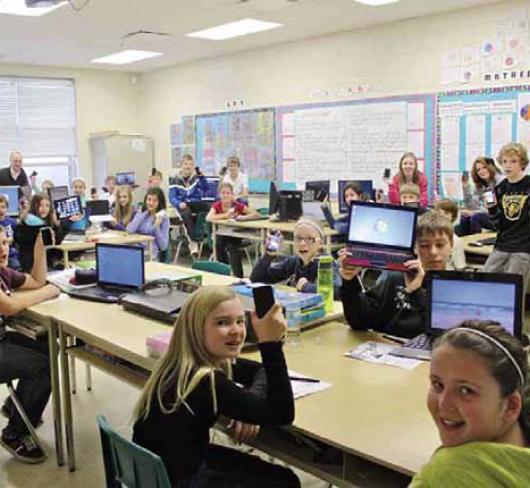
In addition to traditional computers, students in my classroom use mobile devices as learning tools to collaborate, investigate, innovate, and express themselves creatively. While students use these devices almost instinctively, teachers may struggle to understand their releva
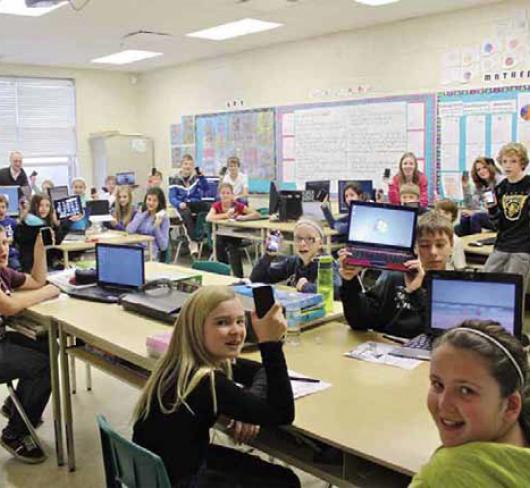
The New Media Consortium’s 2011 Horizon Report, which examines emerging technologies for their potential impact on and use in teaching, focuses on four key trends forecast for the next five years in education.1
“Education is a social process. Education is growth. Education is not a
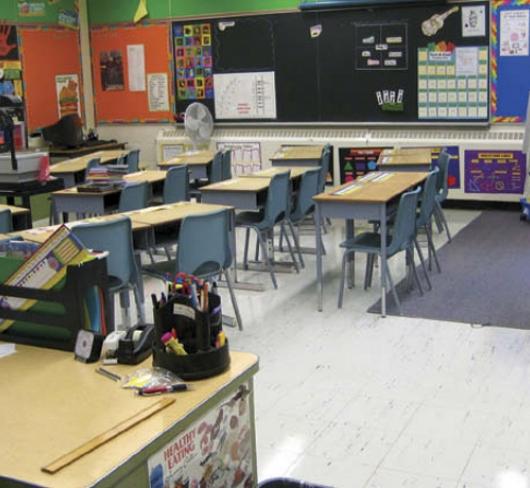
This September, after several years as a program resource consultant and a term as an acting vice-principal, I’m returning to the classroom. By the time you read this, dear colleagues, I’ll have been teaching my 3/4 split in southwest Mississauga for nearly two months.
In 2006 the Autism Spectrum Disorders Reference Group was set up to provide recommendations to the minister of education and the minister of children and youth services about effective, evidence-based educational practices to meet the strengths and needs of students wi
The Education Act requires individual education plans (IEPs) for students identified as exceptional through an identification, placement, and review committee (IPRC).